A bottle of BloomBerry wine is scored before it finishes: each berry, the yeast and the water add or take away points, and the total sets the grade. Two small healthy berries in clean water reach Master Vintage with ordinary Yeast, so inspect the fruit first and spend on upgrades last.
200Credits for the Retired Winemaker in Wild's Network
750 mLof water per bottle, and the start check wants at least 749 mL
6finished grades, Undrinkable to Master Vintage
100Credits: what a finished bottle starts at before quality and aging
From first bottle to aged stock
Unlock the trade and make one small batch
Pay Joe Wild 200 Credits for the Retired Winemaker. You get 3 Yeast, 3 Wine Bottles, 2 BloomBerries, a Water Ration, a Magnifying Glass and the BloomBerry Wine Fermenting Guide on the spot, enough to learn one full fermentation before you scale up.
The Retired Winemaker calls the next day, then weekly: 8 BloomBerries, 4 bottles, Yeast and Water Rations every Friday.
Note the fruit and water of each batch and change one ingredient at a time, so you know what moved the grade.
Fill the Wine Bottle to the recipe's 750 mL. Filtering can leave a bottle short, and the start check refuses anything under 749 mL, so top it up and read the amount inside rather than the bottle's capacity.
Inspect every berry
Put each berry under the Magnifying Glass before you buy or use it. A healthy small berry is worth double a healthy normal one, so the bigger fruit is the worse pick. One berry starts a batch; two or more earn their own bonus point.
Glowing or unusual fruit is no guarantee of quality, so inspect it like any other berry.
Add yeast and start fermenting
Ordinary Yeast and Super Yeast give the same one-point bonus. Super Yeast only makes fermentation faster, so it never lifts the grade. Leaving yeast out still starts a fruit batch but costs you that point.
Start with ordinary Yeast until a fruit and water pairing works, then decide whether speed is worth 20 Credits instead of 10.
Read the finished bottle
Inspect the wine and match its label to the grade. The shared bottle carries a label picked by the wine's score, and counterfeit wine wears a red one. More points inside the same band create no extra grade, so 3 and 4 are both Production Wine.
Age it as a separate step
Load finished wine into an AgeWell, which adds an extra aging day each cycle. Fit Quality modules there, watch one night's progress and only then buy more. Aging speeds up a good bottle; it cannot repair poor fruit or water.
Dr. Jackson adds the AgeWell and the Yeast Bioreactor to his stock once you have the winemaker training.
Add the berry points, then the bonuses below. The total sets the finished grade.
Berry
Points each
Healthy small
+2
Healthy normal-sized
+1
Underripe or overripe
0
Moldy
−1
Bonuses
+1 for two or more berries+1 for yeastWater: +1 to −3
Finished grade
Score
Master Vintage
6 or more
Reserve
5
Production Wine
3–4
Homebrew
2
Bucket Brew
1
Undrinkable
0 or less
Synthetic Yeast is contraband
Swap in Synthetic Yeast and the batch becomes GloomBerry Wine with its score reset to 3. The bottle looks like Homebrew, starts at 44 Credits and counts as contraband, so it is no upgrade on ordinary Yeast.
Berries against water: the grade chart
Find your berries on the left, then read the grade under your water. The chart assumes yeast is in the bottle; without it, read one row down.
Berries in the bottle
Pure Water / High-Quality
Basewater
Ghostwater
Rustwater
Gutterflow
Small + Small
Master Vintage
Master Vintage
Reserve
Production Wine
Production Wine
Small + Normal
Master Vintage
Reserve
Production Wine
Production Wine
Homebrew
Small + Underripe or overripe Normal + Normal
Reserve
Production Wine
Production Wine
Homebrew
Bucket Brew
Small + Moldy Normal + Underripe or overripe One Small
Production Wine
Production Wine
Homebrew
Bucket Brew
Undrinkable
Normal + Moldy Underripe or overripe pair One Normal
Production Wine
Homebrew
Bucket Brew
Undrinkable
Undrinkable
Underripe or overripe + Moldy One Underripe or overripe
Homebrew
Bucket Brew
Undrinkable
Undrinkable
Undrinkable
Moldy + Moldy One Moldy
Bucket Brew
Undrinkable
Undrinkable
Undrinkable
Undrinkable
Without yeast the bottom row is Undrinkable in every water.
Where the water budget goes
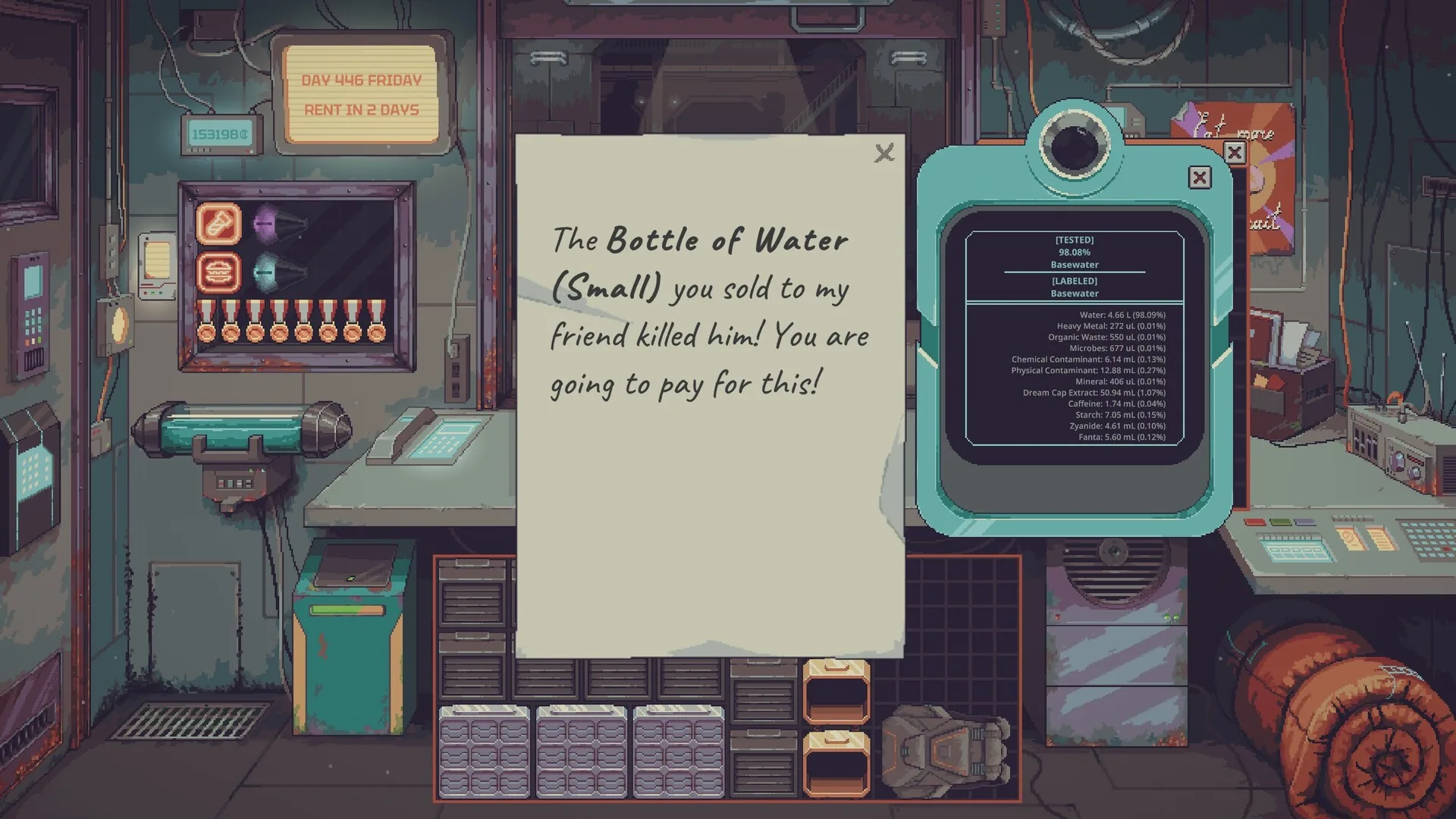
Scan the water before it goes in the bottle: this batch tests as Basewater, which adds nothing to a wine's score but costs it nothing either.
High-Quality is the target
High-Quality water beats Basewater by one point and Pure Water adds nothing more. Run a test batch at High-Quality before you pay for the extra purity.
Each step down costs a point
Ghostwater, Rustwater and Gutterflow take away one, two and three points. Two small berries survive even Gutterflow as Production Wine, but one normal berry does not.
Fix the water, then the fruit
With good fruit, a single step up in water can lift a bottle a full grade. Keep a tested reserve so a batch never has to wait on an empty tank.
Base values per bottle and packet. A household-goods buying sign brings offers in between Friday visits, but what customers carry is random.
14
Fruit
Base value per BloomBerry. Watch food trades and farm-worker visitors, or grow your own from Bloomberry Seed: the bush fruits again and rewards clean water.
50
Margin
Credits at base value for a bottle, Yeast and two berries before water, against 100 for finished wine. Neither figure is a promised offer, so check real sales before you expand.
When a batch goes wrong
Fermentation will not start
Check the ingredients and the water left after filtering, then refill to the recipe amount.
Expensive yeast changed nothing
Yeast power only sets the speed. Look at the fruit and the water instead.
Pure Water brought no gain
Pure Water and High-Quality score the same, so compare one bottle of each before you pay extra.
Aging crawls
Look at the AgeWell's Quality setup and compare its progress after a night.